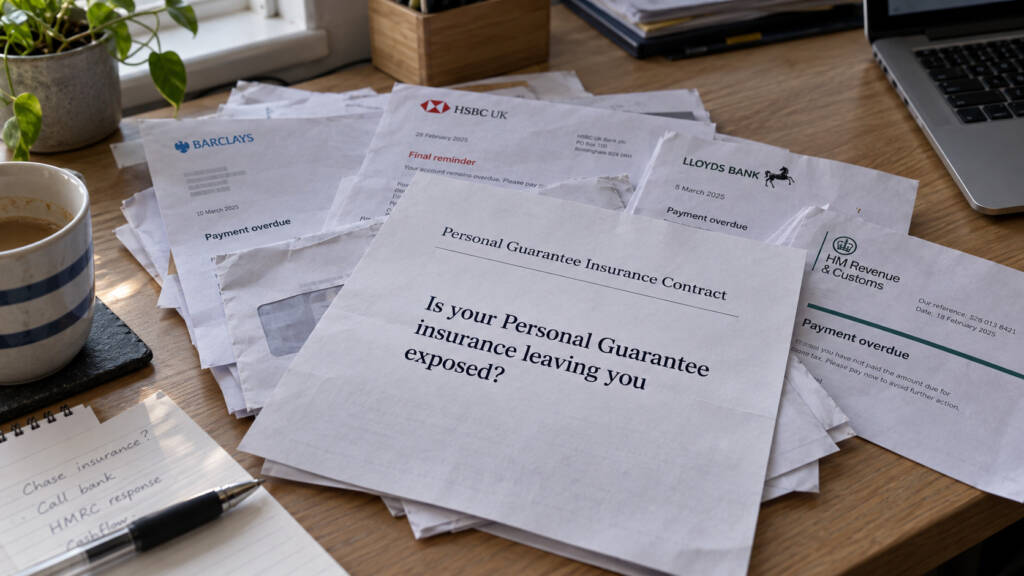
Personal guarantee insurance is marketed as a safety net for directors who sign guarantees to secure business finance. While it promises to cover much of the debt if the lender demands payment, the terms are stricter and the protection often kicks in much later than directors expect.
This article covers what a typical policy includes, when it pays out and where the gaps are. It also explains why Bell & Company doesn’t offer or recommend this type of cover and what we do instead. If you have already signed a guarantee without insurance, the last sections describe your options for handling it directly.
What Is Personal Guarantee Insurance?
Personal guarantee insurance is for company directors who have signed a personal guarantee to support a business loan or facility. You pay a monthly or annual premium and the insurer agrees to pay part of the guarantee if certain conditions are met. The policy does not replace your guarantee, so you’re still personally liable to the lender for the full amount.
Most UK policies cover up to 80% of the guaranteed sum, leaving you responsible for the remaining 20%. The cover is capped at a fixed amount set when the policy starts and does not increase if the debt grows. Lenders aren’t involved in the policy, so it doesn’t affect how or when they can demand payment.
How Much Does It Cost?
Premiums start from around £50 a month, but the real figure depends on the guarantee’s size and your business’s health. An insurance premium tax of 12% is added on top and some providers also charge a separate transaction fee. Insurers also review your accounts closely and a business already under strain may struggle to get cover.
When Does a Policy Actually Pay Out?
The trigger for a claim is far narrower than most directors assume when they first take out a policy. Under standard wording, the insurer pays only once the company has entered a formal insolvency procedure, such as administration or liquidation. That procedure must then have concluded, with the insolvency practitioner having realised the company’s assets and distributed the proceeds.
The lender must have negotiated with you and made its final settlement request under the guarantee. The insurer pays only after these steps are complete and only to the lender. Insolvency can take months or even years, so there’s often a long wait between the lender’s demand and any payout.
How Much the Insurer Pays
The insurer pays the lender’s final demand, up to the insured amount, minus your percentage share. They also deduct anything you owe the company at the end of insolvency, like an overdrawn director’s loan account. Most policies allow the insurer to settle with the lender at any time and then consider their responsibility finished.
Where the Protection Falls Short
The headline figure of 80% cover makes it seem like you only carry 20% of the risk. In reality, several parts of the policy mean your actual exposure is often much higher.
You May Have to Pay Before the Insurer Does
A lender can demand payment under your guarantee before the insolvency process is finished. You might get demands just weeks after the company fails, but the policy will not pay out until the process is over. During this time, you could face growing interest and enforcement action without any insurance money to help.
Many directors end up paying some or all of the debt themselves to relieve the pressure. If the insurer pays the lender’s final demand, any money you have already paid reduces the claim and you don’t get it back.
Your Home May Already Be at Risk
Many personal guarantees are secured against the director’s home, giving the lender something to act on. The policy pays only after the company’s assets are sold, but the lender doesn’t have to wait. By the time a claim is paid, a director may have already sold assets or faced losing their home. In these cases, the insurance often comes too late to defend what matters most.
Fees and Interest Sit Outside the 80%
The insured amount is fixed when the policy starts, but the lender’s demand frequently increases over time. Lenders usually add default interest, legal costs and enforcement fees, which can build up quickly. Anything above the insured amount is your responsibility, along with your 20% share. For large guarantees, your real share can easily exceed the headline figure.
Strict Conditions Can Void a Claim
Policies require you to tell the insurer in writing as soon as you notice any possible problems. This includes missing a loan payment, getting a demand from a lender, or even planning a meeting with an insolvency practitioner. If you miss any of these notifications, the insurer can usually refuse your claim completely.
Many policies also require the company to use an insolvency practitioner chosen by the insurer as the only office holder. The insurer can refuse claims if they think you knew about the company’s problems before the cover started. Directors trying to keep a business going often do not focus on these conditions.
Why We Don’t Offer or Recommend PGI
Some directors might find a PGI policy helpful, but the protection is too limited and often comes too late. Many of the cases we deal with involve personal guarantees being called in, which is when these policies are really put to the test.
At that stage, early and expert negotiation with the lender makes the biggest difference. Lenders often accept much less than the full guarantee when they see a realistic, evidence-backed offer. Over the past 18 years, we have helped clients reduce personal guarantee liabilities by more than £420 million through direct negotiation.
A Better Route: Dealing With the Guarantee Directly
We start by closely reviewing whether your guarantee is enforceable as written. We create a settlement proposal based on what you can realistically afford, without waiting for insolvency to finish.
By dealing with the lender from the start, you won’t be left to face demands on your own as the process continues. This approach may help directors protect their home and move forward much sooner than waiting for an insurance claim.
What If You Never Took Out Insurance?
Many directors only learn about personal guarantee insurance after a lender has started chasing them for payment. Some also think a limited company protects them personally, but that doesn’t apply to a signed guarantee. If you don’t have a policy, you still have options, because you can use the same negotiation approach either way.
If a Lender Is Already Chasing You
If more than one director signed the same loan, the liability does not automatically split evenly. With joint and several guarantees, a lender can go after any one signatory for the full amount. This can cause tension between co-directors, but these situations are often more negotiable than people think.
If you are already getting demands or threats of a statutory demand, things can move quickly if you do not respond properly. Getting advice before you reply to the lender usually gives you more options and a stronger negotiating position.
Talk to Bell & Company About Your Personal Guarantee
Personal guarantee insurance provides some protection in theory, but payout conditions limit its value for most directors. Payment only comes after insolvency is finished. By then, the lender may have already taken action against you or your home.
Bell & Company works directly with lenders to help reduce personal guarantee liabilities and protect directors’ homes and other assets. Whether you have a policy or not, the best first step is to get a proper assessment of your guarantee and your options. Contact us today for a free, confidential consultation to see where you stand.