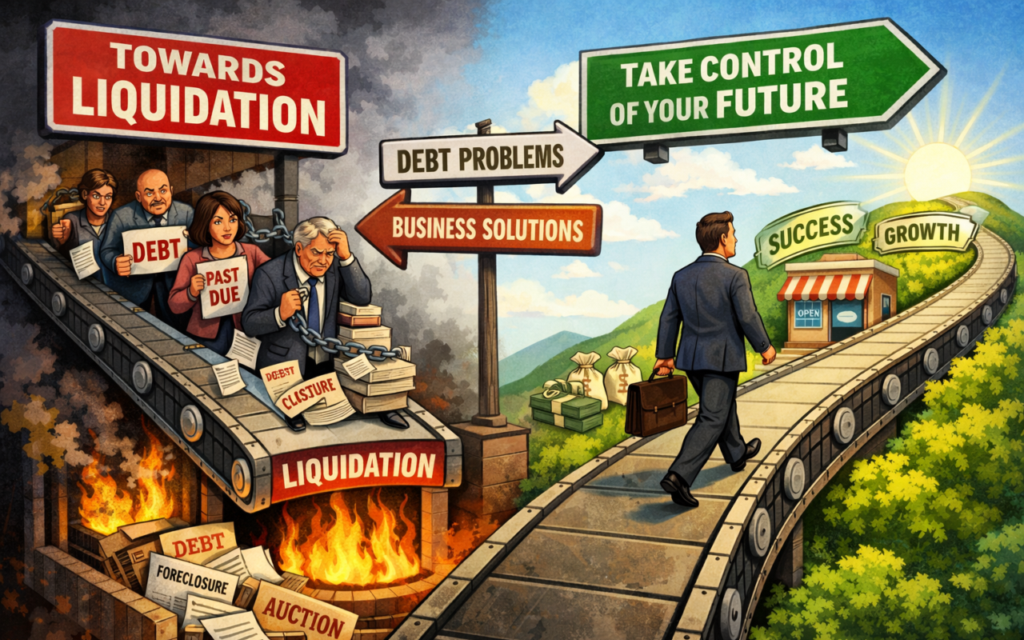
Why Established Businesses Are Now at Greater Risk of Insolvency
Articles
For years, business failure has been seen as a ‘start-up problem.’ New ventures are often expected to face financial challenges, while established, family-run companies are viewed as safe, stable, and enduring.
But the data tells a very different story.
Across the UK today, approximately one in every 190 companies enters insolvency each year. And according to PwC, start-ups now account for just 46% of total insolvencies — the lowest proportion in a decade. This means established, long-standing businesses are increasingly at risk.
Even more concerning, the number of UK firms in “critical” financial distress has risen by 21.4% year-on-year, now affecting nearly 50,000 companies.
These are not inexperienced founders or speculative ventures. They are often multi-generational, family-run businesses, built through years of personal effort and sacrifice. For many directors, their company represents not just a livelihood, but their savings, pension, and home. When financial pressure strikes, the consequences are personal, far-reaching, and deeply felt.
When Legacy Businesses Come Under Pressure
At Bell & Company, we see this reality every day. Long-established businesses – from manufacturing and healthcare to hospitality and professional services – are finding themselves under increasing pressure from creditors, lenders, and, in particular, HMRC.
The rise in HMRC enforcement activity has been one of the major drivers behind recent insolvencies. Many firms find that a simple tax debt spirals into a crisis, not because their business is unviable, but because negotiations break down or communication stalls.
When that happens, enforcement action, asset freezes, or winding-up petitions can quickly follow.
A Case Study: How One Healthcare Business Regained Control
One recent case illustrates just how critical early intervention can be.
One of our clients, a healthcare business, had traded successfully for eight years. When they fell behind on a £238,000 PAYE debt, they attempted to negotiate directly with HMRC for a Time To Pay (TTP) arrangement. Unfortunately, their proposal was rejected, and enforcement action was imminent. This threatened the company’s future and, more pressingly, vital patient care and local jobs.
Our team stepped in to manage the situation strategically. Through transparent documentation, in-depth financial analysis, and a detailed understanding of HMRC’s Litigation and Settlement Strategy, we reframed the issue from a debt-recovery problem into a commercial viability case.
“After months of struggling alone, I finally felt heard.”
Her business was given the second chance it deserved – proof that with the right support, viable companies can recover and continue to thrive.
How Bell & Company Helps Protect Viable Businesses
For over 15 years, Bell & Company has specialised in supporting both new and established businesses facing complex financial and creditor challenges.
We focus particularly on cases involving HMRC liabilities, such as:
PAYE and VAT arrears
Corporation Tax disputes
Time To Pay (TTP) breakdowns or rejections
Director’s personal guarantees and enforcement actions
Our approach combines forensic financial analysis, strategic negotiation, and direct engagement with creditors to reach realistic, commercially sound solutions.
Every business we assist is different, but our goal remains the same: to protect what you’ve built and ensure that financial pressure doesn’t erase years of hard work and personal investment.
Don’t Wait Until Options Disappear
One of the biggest challenges we see is that directors often wait too long before seeking help. By the time formal enforcement begins, the available options can be severely limited.
If your business is under growing pressure from HMRC, lenders, or enforcement agents, the most important step is to act early. Our experienced team can assess your situation, open lines of communication with creditors, and work towards a structured solution that preserves both your company and its future.
Our track record speaks for itself:
Over 15 years of helping businesses navigate financial difficulty
Hundreds of happy clients, success stories, and positive testimonials
Take the First Step Toward Regaining Control
If you’re feeling overwhelmed by creditor pressure or HMRC demands, remember: you’re not alone, and your business may have more options than you think.
At Bell & Company, we offer confidential, professional advice tailored to your circumstances. Whether you need immediate assistance with a Time To Pay arrangement or longer-term restructuring support, our team is ready to help.
And if you’re not quite ready to take action, download our free guide: 📘 “HMRC Business Debt – The Complete Guide.” It’s packed with practical advice on how to manage, negotiate, and overcome HMRC debt challenges.
Get a Free Consultation Today
Worried about debt? We know that sometimes taking the first step can be the most difficult part.
Our experienced experts are always available to discuss your situation and provide options.
Contact us today for a free case review with one of our specialists.
Statutory Demands, Personal Guarantees & Creditor Pressure: What Every Director Needs to Know
Struggling with creditor pressure, statutory demands, or PG exposure? Discover the 5 essential answers directors need to protect their assets and take back control.
“I Can’t Believe No One Told Me This Before”: Why Directors Are Choosing Non-Formal Insolvency Solutions
Discover why directors are moving away from costly liquidations. Explore non-formal insolvency solutions to protect your future and avoid high upfront fees.
Why Choose Bell & Company? 7 Differentiators for Stressed Business Owners
When business owners approach Bell & Company, they are often at their breaking point – exhausted, stressed, and wary of the “advice” they’ve received elsewhere. Many have already consulted with insolvency practitioners or accountants who left them feeling like just another number. A comprehensive analysis examining competitor-related discussions across our consultation calls revealed a...