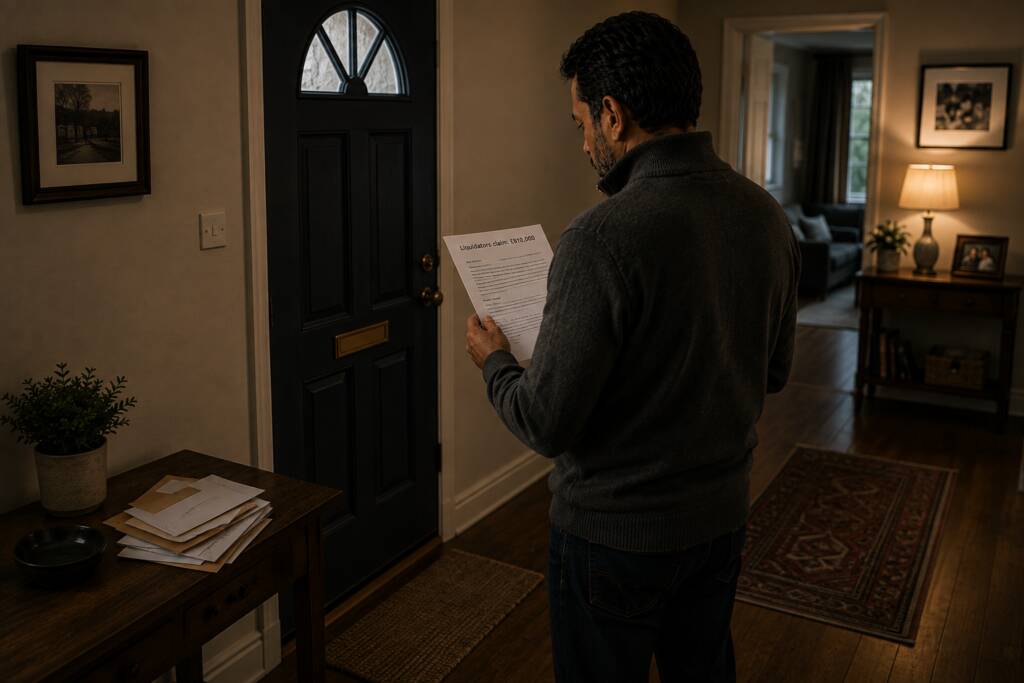
There are things that are supposed to scare us at Halloween.
Your phone ringing shouldn’t be one of them.
Neither should an email landing in your inbox, a letter arriving at your home, or seeing a creditor’s name flash up on your phone again.
But for UK company directors and business owners facing business debt, Personal Guarantee claims or creditor pressure, those small moments can start to feel very different.
You start wondering:
- Can they come after my home?
- What happens if I can’t pay my Personal Guarantee?
- Can a creditor make me bankrupt?
- What happens to my family home if my company goes into liquidation?
- Can I negotiate a Personal Guarantee settlement?
- How long do I have before the creditor takes legal action?
And perhaps the most frightening question:
Is it already too late to do something about it?
At Bell & Company, these are not hypothetical questions, they are questions we hear from directors every day, and very often, the scariest part isn’t the debt itself, it’s facing it alone.
When business debt becomes personal
Most directors don’t start businesses expecting things to go wrong.
- They build companies.
- Employ people.
- Pay wages.
- Take risks.
- Sign finance agreements.
- Provide Personal Guarantees to access funding.
- Buy homes.
- Raise families.
- Build equity and financial security over many years.
Then circumstances change.
The company experiences cash-flow difficulties. A major customer fails. HMRC arrears build. The business enters liquidation. A lender calls on a Personal Guarantee. A liquidator raises an Overdrawn Director’s Loan Account claim.
Suddenly, what began as a company problem can become a very personal financial problem.
Directors are responsible for company debts they have personally guaranteed. A Personal Guarantee can potentially expose personal assets, including a director’s home, savings and investments, if the company cannot meet the guaranteed liability.
That’s when the fear starts, and fear has a habit of encouraging people to wait.
The Consequences of Fear
Recently, a director asked us something that brought home just how real that pressure can become: “Can I just wait until Christmas is over so I can buy presents for my children?”
It’s an incredibly human question, because when debt starts closing in, most people aren’t thinking about insolvency legislation.
They’re thinking about maintaining some sense of normality.
- Get through Christmas.
- Get through the next payroll.
- Get through another month.
- Don’t worry the children.
- Don’t tell your partner until you know what’s happening.
- Keep the business going and hope something changes.
But the financial problem doesn’t necessarily stand still while you do.
Interest may continue to accrue. Charges may increase. Creditor pressure may escalate. Enforcement action can progress. And depending on the circumstances, options available now may become more restricted later.
The Insolvency Service itself advises directors to address company financial problems as soon as possible, noting that doing so may create opportunities to arrange finance or payment plans and limit the impact on the company, creditors, directors and shareholders.
Sometimes the best way to protect normal life isn’t to prolong the problem, it’s to get ahead of it.
Can a Personal Guarantee put your home at risk?
Potentially, yes – but receiving a Personal Guarantee demand does not automatically mean you will lose your home.
A Personal Guarantee is a legally binding commitment under which a director or business owner may become personally responsible for a company liability if the business fails to pay, this also means that assets can potentially be exposed under a Personal Guarantee.
For many directors we speak to, this is the real fear, not the letter or even the headline debt, but the house behind it.
The home where your children sleep, the equity you’ve spent years building, the financial security you thought you’d created.
One client put it simply:
“My only concern is my home.”
Another told us:
“My worry is making sure I can keep the property.”
That is why Bell & Company does not look at a Personal Guarantee in isolation, we look at the entire personal and commercial position.
- The liability.
- The creditor.
- The wording and circumstances of the guarantee.
- Income and affordability.
- Property and equity.
- Other assets.
- Other creditors.
- Enforcement risk.
- What outcome is the creditor realistically likely to achieve if they pursue matters further?
That commercial reality can be extremely important when developing a negotiation strategy.
Case Study
Outcome
Full & Final Settlement
Business Debt
Personal Guarantees
Reducing Pressure, One Creditor at a Time: A 94% Reduction on a £248,000 Business Loan
Bell & Company achieved a substantial early settlement on one of the client’s largest liabilities, reducing immediate pressure while continuing to manage the wider creditor position.
Read Case Study
Case Study
Outcome
Family home saved
Personal Guarantees
Protecting the Future: How Early Intervention Saved a Family Home and £160,000 in Debt
While the business was still trading, the proactive intervention of a carer saved a mechanic’s family home from a £210,000 personal guarantee. Amidst rising automotive insolvencies in 2026 and economic pressures, learn how Bell & Company secured a £160,000 saving through expert negotiation and the protection of matrimonial interests.
Read Case Study
Worried about a Personal Guarantee or creditor threatening your home?
You don’t need to read another ten articles before speaking to someone.
Tell Bell & Company what’s happening. We’ll help you understand what you’re facing, what is at risk and what commercial options could be available.
“I can’t afford what they’re demanding.” What happens now?
This is one of the most common fears we hear.
“I can’t afford it.”
“No, I can’t pay that.”
“I just can’t think where any money’s got to come from.”
Depending on the circumstances, a strategy might involve negotiating a reduced full-and-final settlement, structuring affordable repayments, challenging elements of a claim, buying time to raise funds, addressing enforcement risk or considering a different formal or informal route.
There is no universal percentage by which a Personal Guarantee or other debt can be reduced, and no reputable adviser should promise a particular settlement before understanding the facts.
But there can be a considerable difference between simply accepting a demand and strategically assessing the creditor’s likely recovery position.
Case Study
Outcome
Full & Final Settlement
Business Debt
Director's Loan Account
Liquidation
Finance Director Secures an 88% Reduction on an £810,000 Liquidation Claim
Overview Sector: Financial Services Case type: Full & Final Settlement Creditor representative: Liquidator’s solicitors Original claim: £810,000 Settlement achieved: £100,000 Saving achieved: £710,000 Percentage reduction: 88% The Background Our client had been the director of a finance business that ultimately ceased trading following significant cash flow pressures. After…
Read Case Study
Case Study
Outcome
Family legacy saved
Business Debt
Personal Guarantees
How We Turned a £300,000 Debt and the Threat of Bankruptcy into a £30,000 Settlement
Personal Guarantee Settlement: Facing bankruptcy? Discover how our experts protected a family’s home and secured a 90% debt reduction.
Read Case Study
What should you do when creditors won’t stop calling?
Creditor pressure can become relentless, one prospective client described creditors as: “Sharks.” Another told us a lender was calling: “About eight or ten times a day.”
When calls, emails, solicitor correspondence and deadlines are arriving simultaneously, people often start making decisions simply because they want the pressure to stop.
That can be dangerous.
Pressure and strategy are not the same thing.
At Bell & Company, our role is to help establish:
- what the creditor can actually do;
- what stage the matter has reached;
- what deadlines genuinely matter;
- what assets may be exposed;
- whether time can be created;
- whether negotiation is possible; and
- what strategy offers the strongest commercial outcome.
Sometimes, creating breathing space changes the entire conversation. Time can create options.
But it needs to be used strategically.
I’ve received a Statutory Demand. Should I be worried?
A Statutory Demand should never simply be ignored.
In England and Wales, a Statutory Demand generally gives the recipient 21 days to pay the debt or reach an agreement to pay. Failure to deal with it can potentially lead to bankruptcy proceedings against an individual or winding-up proceedings against a company.
There can also be shorter deadlines if an individual intends to challenge a Statutory Demand: an application to set one aside will normally need to be made within 18 days when received in the UK.
That is why receiving one is a moment to act, not panic.
If you have received a Statutory Demand relating to a Personal Guarantee or personal business liability, take specialist advice promptly and establish exactly what options and deadlines apply to your circumstances.
Will I have to go bankrupt because of business debt?
Not necessarily.
Bankruptcy is one possible outcome for an individual who cannot pay their debts, but it is not automatically the outcome of receiving a Personal Guarantee demand or experiencing business failure.
Whether bankruptcy is appropriate – or avoidable – depends on the individual circumstances.
One of our clients described it particularly well:
“Bankruptcy is… I think it’s a scarier word than a reality of a situation.”
For some people, bankruptcy may ultimately form part of a rational strategy.
For others, negotiation, settlement, repayment arrangements or another route may produce a better outcome.
The important thing is not to make that decision because you’re frightened of the word.
Understand the numbers.
Understand your assets.
Understand the consequences.
Understand the alternatives.
Then decide.
What does Bell & Company actually do when a director is under creditor pressure?
We are debt strategists.
That distinction matters.
Our role is not simply to tell you that you owe money.
You already know that.
Our role is to understand the entire position and develop the strongest commercially achievable strategy available.
1. We create breathing space
Where appropriate, we engage with creditors and work to create the time needed to assess your options properly.
2. We replace fear with facts
- What can the creditor actually do?
- What is genuinely at risk?
- What deadlines matter?
- What doesn’t necessarily have to happen?
3. We negotiate commercially
We assess the creditor’s position, your position and the realistic recovery alternatives before developing a negotiation strategy.
4. We focus on what you’re trying to protect
For many clients, that means:
The family home.
Property equity.
Income.
Business interests.
Savings.
Family security.
Their future.
Because behind every Personal Guarantee, creditor letter and demand for payment is a person trying to protect the life they’ve built.
Real debt strategies. Real outcomes.
The right strategy depends entirely on the facts, and past outcomes cannot guarantee future results.
But our case studies demonstrate why directors should understand their options before assuming that a creditor’s opening demand represents the only possible outcome.
Every case is different.
But every case starts in the same place, understanding the problem before deciding how to deal with it.
Questions directors ask us about business debt and Personal Guarantees
Can a creditor take my house because of a Personal Guarantee?
A Personal Guarantee can expose personal assets where a guaranteed company debt is not paid. However, the actual risk to a particular property depends on the guarantee, creditor action, ownership, equity, other liabilities and the wider circumstances. Receiving a demand does not by itself mean your home will automatically be taken.
Can a Personal Guarantee be negotiated?
Personal Guarantee liabilities can sometimes be negotiated, depending on the creditor, assets, affordability, enforceability, likely recovery through enforcement and the commercial circumstances. There is no guaranteed settlement percentage. Bell & Company assesses the full position before developing a negotiation strategy.
What happens to a Personal Guarantee if my company goes into liquidation?
Liquidation of the company does not ordinarily make a valid Personal Guarantee disappear. If the company cannot repay the guaranteed liability, the creditor may seek repayment from the guarantor personally.
Should I ignore creditor calls while I decide what to do?
Ignoring the underlying issue can allow matters to progress. The better approach is generally to establish what stage the creditor has reached, identify relevant deadlines and obtain appropriate advice before deciding how to respond.
Can a creditor make me bankrupt over a Personal Guarantee?
Potentially, where a valid personal debt exists and the statutory requirements for creditor bankruptcy are met. In England and Wales, a creditor can apply to make an individual bankrupt where they owe £5,000 or more and the relevant conditions are satisfied.
What should I do if I can’t afford the amount demanded?
Do not assume that your only options are finding the full amount immediately or doing nothing. Depending on your circumstances, potential routes may include negotiation, settlement, repayment proposals or formal debt solutions. The appropriate strategy depends on the creditor, liability, assets, income and enforcement position.
When should I get help with business debt?
Earlier is generally better.
If you’re already worrying about your home, avoiding creditor calls, receiving legal correspondence or wondering whether you can postpone dealing with the problem until after the next milestone, it is worth establishing your position now.
If you’re facing Personal Guarantee debt, creditor pressure, an Overdrawn Director’s Loan Account, HMRC arrears, a Statutory Demand, threatened enforcement or potential bankruptcy, don’t wait for the situation to decide your next move for you.
Get Bell & Company in your corner.
- We’ll establish the position.
- We’ll identify what’s genuinely at risk.
- We’ll look at what you’re trying to protect.
- We’ll assess the creditor’s commercial position.
- And we’ll build the strongest strategy available based on your circumstances.
The scariest thing is facing debt alone.
You don’t have to.
Every case depends on its individual facts and circumstances. Previous case outcomes do not guarantee the same or similar result in another matter.